Sustainability & ComplianceTKT-7C0F
Nike Shifts 50,000 TEUs a Year to Electric Barge in Vietnam
CMA CGM's battery-powered barge will carry 50,000+ TEUs annually between Nike's Ho Chi Minh City hub and Gemalink terminal, avoiding 778t of CO2 per year.
- Cut
- November 17, 2026
- Sew
- 3 min
- Ticket
- TKT-7C0F
Construction
Electric barge to move over 50,000 TEUs annually on a 180km round trip in Vietnam, avoiding 778t of CO2 per year
Vessel uses CATL batteries and charges in about four hours on solar power from Gemalink terminal
Nike targets 75% emissions cuts in operations and 35% across its supply chain by 2030 vs FY2020 baseline
CMA CGM has operated in Vietnam since 2006, with five offices and 29 weekly mainline services
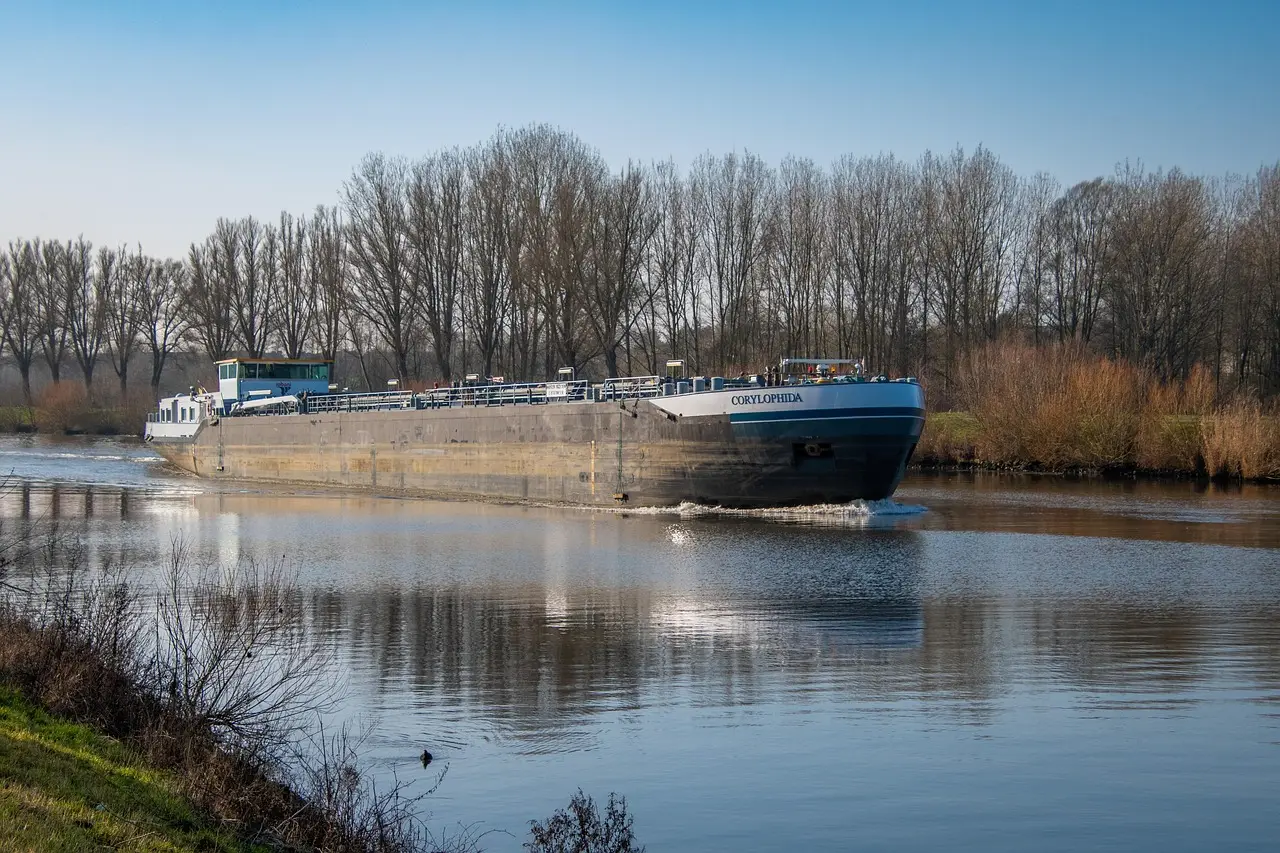
Nike will move more than 50,000 TEUs a year off Vietnamese roads and onto a 100% electric barge, cutting an estimated 778 tonnes of CO₂ annually on the corridor between its inland drop-off point in Ho Chi Minh City and the Gemalink deep-sea terminal at Cai Mep. CMA CGM confirmed the launch in a statement on 29 October, positioning the vessel as a working alternative to trucking containers between the two sites.
The 180km round-trip route links Nike's inland facility to Gemalink, the terminal operated by Vietnamese logistics group Gemadept. The barge runs on battery technology supplied by CATL and recharges exclusively with certified renewable electricity from a solar farm installed at Gemalink. A full charge takes roughly four hours using the terminal's renewable-powered charging infrastructure.
What sits behind the sustainability claim?
The emissions figure isn't a marketing round-number; it traces to a specific modal shift. Moving those 50,000-plus TEUs by water instead of road avoids 778t of CO₂ each year — a figure CMA CGM puts forward as the measurable output of the project. The vessel itself was designed by CMA CGM's New Build and R&D teams together with the project partners.
Nike frames the investment against hard targets: a 75% cut in greenhouse gas emissions across its own operations and a 35% reduction across its extended supply chain by 2030, measured against a financial year 2020 baseline. Inland transport sits squarely in the second, harder category — emissions Nike doesn't directly control but increasingly contracts to influence.
Nike chief sustainability officer Cimarron Nix said: "Reducing emissions across a global supply chain takes more than any one company. It takes new ideas, strong partnerships and a willingness to rethink how we operate." Nix called the project with CMA CGM and Gemadept "a great example of how we can work together to turn innovation into practical solutions that reduce our impact while building a more resilient supply chain."
Is this a one-off or a template?
CMA CGM is explicit that it wants replication. The partners describe the vessel as a "model" for sustainable inland waterway freight that could be adapted to other geographies and customer requirements. For sourcing executives, that matters more than the single route: Vietnam's garment and footwear belt depends heavily on trucked feeder moves between inland factories and the Cai Mep–Thi Vai port cluster, and a proven electric-barge economics case could extend to other shippers on the same waterways.
CMA CGM's assets and operations executive vice president Christine Cabau said: "Decarbonising global supply chains requires moving beyond ambition to deliver concrete, scalable solutions." She added that the partnership with Nike and Gemadept demonstrates "innovative, lower-carbon inland transportation solutions are already within reach."
Why Vietnam, and why now?
The move reinforces a position CMA CGM has built since entering Vietnam in 2006. The carrier now runs five offices there and 29 weekly mainline shipping services, giving it the terminal and inland network to make electric feeder operations stick. The project also aligns with Vietnam's own push toward renewable energy and more sustainable logistics infrastructure.
For buyers sourcing footwear and apparel out of Vietnam, the decision this forces is straightforward: if Scope 3 targets are to hold, inland freight contracts — not just factory audits — become a lever. Nike has shown one contract structure that couples a renewable-charged vessel, a terminal operator and a carrier into a single auditable emissions reduction. The question for other sourcing teams is whether their logistics providers can offer the same, and at what cost per TEU.
via just-style (Source)
More from Olivia Hart
Show full bio
Senior reporter covering regulation, policy and their impact on Light industry and softgoods manufacturing at Softgoods Report.
336 articles