Trade & Sourcing PolicyTKT-94E3
Uzbekistan and Poland Move to Broaden Textile Industry Ties
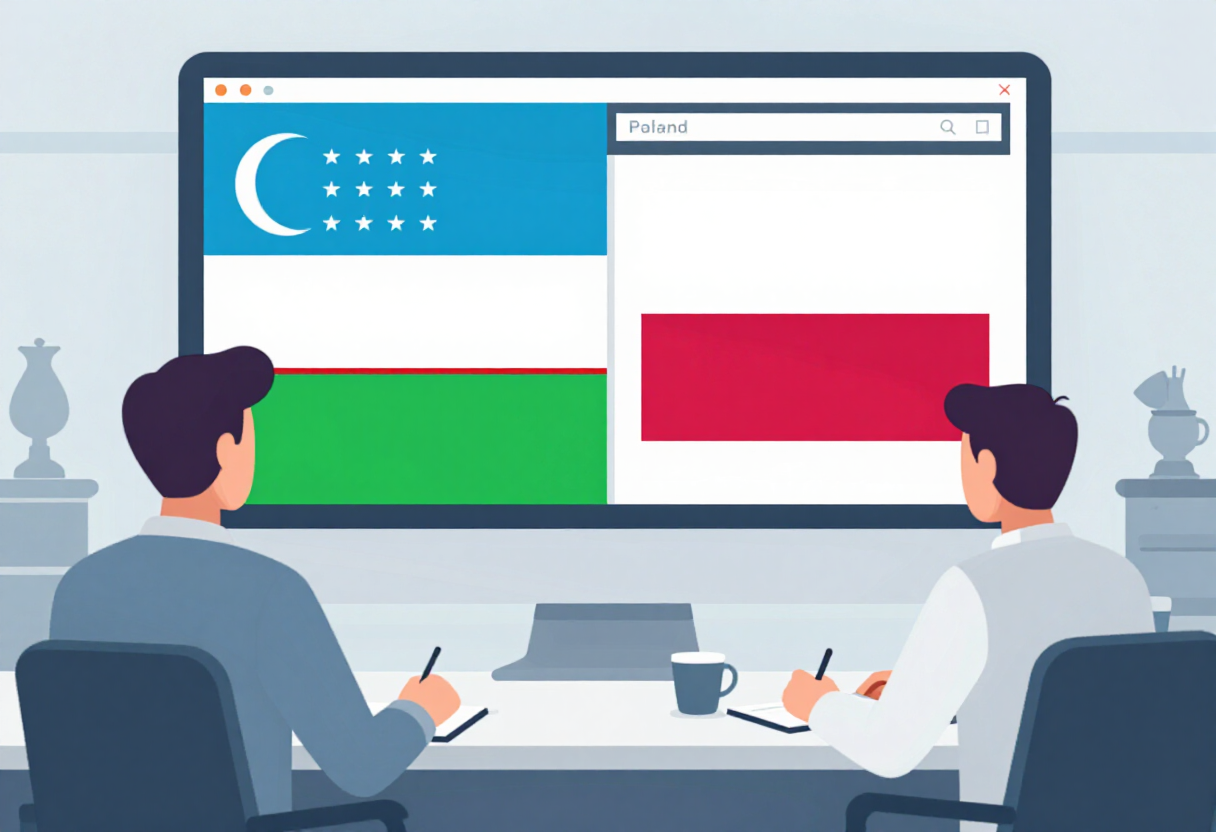
Uzbekistan and Poland are expanding textile industry cooperation, per Dunyo — state-level intent that could open a new yarn-to-garment route into EU supply chains.
- Cut
- September 28, 2026
- Sew
- 3 min
- Ticket
- TKT-94E3
Construction
Uzbekistan and Poland are expanding textile industry cooperation, as reported by state news agency Dunyo.
The announcement is a framework for industrial cooperation, with no confirmed order volumes, named companies, or investment figures yet disclosed.
Buyers sourcing Uzbek cotton into the EU must comply with CSDDD due diligence rules that entered into force in July 2024.
Uzbekistan and Poland are expanding cooperation in the textile industry, according to a report published by Dunyo, the news agency of Uzbekistan's National News Agency, which covers the country's foreign economic relations.
The development points to a further institutional push by Tashkent to position Uzbekistan — one of the world's largest cotton producers and a growing garment manufacturing hub — as a serious sourcing option for European buyers and intermediaries. Poland matters in that equation. It hosts one of Central Europe's largest concentrations of apparel trading companies, contract manufacturers, and distribution networks serving both domestic retail and wider EU markets.
The announcement, as reported by Dunyo, signals intent at the state-to-state level rather than a single confirmed buyer-supplier contract. Trade desk readers should treat the news accordingly: a framework for expanded industrial cooperation, not a booked order book. The specific mechanisms — whether factory-level joint ventures, textile park investments, yarn and fabric supply agreements, or trade facilitation measures — were not detailed in the initial report.
For sourcing managers, the context is familiar. Uzbekistan has spent recent years rebuilding its textile export credentials after the end of the state-mandated cotton harvesting system, which had triggered a decade of boycotts by leading apparel brands under the Cotton Campaign umbrella. The lifting of that boycott in 2022 reopened the country to Western supply chains, and Uzbek producers have since pursued export markets in Turkey, the CIS, and, increasingly, the European Union.
Poland, for its part, functions as both a market and a gateway. Its garment sector combines cut-make-trim capacity, strong logistics links into Germany and Western Europe, and a base of wholesalers that move volume across the EU. Expanded ties could take several forms: Uzbek yarn and fabric feeding Polish cut-and-sew operations, joint investment in spinning or finishing capacity, or Polish trading houses placing garment programmes with Uzbek factories.
What remains unconfirmed is scale. The report does not yet specify order volumes, investment figures, factory headcounts, or named companies on either side. Buyers evaluating the channel will want those numbers before treating Uzbek-Polish cooperation as a procurement option rather than a diplomatic gesture.
Compliance teams have their own checklist. Any Uzbek cotton entering European supply chains must satisfy the EU's due diligence expectations under the Corporate Sustainability Due Diligence Directive (CSDDD), which entered into force in July 2024, plus any buyer-specific cotton traceability requirements. Verification of forced-labour risk — the historical reason brands exited Uzbek cotton — now rests on audits and traceability systems rather than blanket boycott rules. Polish importers acting as intermediaries would carry documentation obligations under those same frameworks.
The commercial logic is nonetheless straightforward. European buyers seeking alternatives to Asian sourcing concentrations, or looking to shorten supply chains amid freight volatility and tariff uncertainty, have shown renewed interest in near-shore and Central Asian options. Uzbekistan offers raw material integration — from cotton fibre through yarn to finished garments — at price points competitive with Turkey and South Asia for basic categories. Poland offers EU-market access, finishing capacity, and established trading relationships.
The decision the news forces on sourcing and compliance desks is concrete. Buyers with exposure to European basic apparel categories should assess whether an Uzbek-Polish supply route fits their 2025–2026 sourcing matrices — and, if so, begin the traceability and due diligence groundwork now, before state-level cooperation translates into commercial offers. Those without a near-term need should still track whether named joint projects, investment figures, or first orders follow this announcement, as those would mark the shift from intent to trade.
via Google News: Textile industry (Source)
More from Priya Raman
Show full bio
News editor covering industry trends and analytics at Softgoods Report.
86 articles