Footwear ManufacturingTKT-F255
Sqairz targets $20m in 2026 as square-toe golf brand scales
Founded in 2020 and on track for $20m in 2026, Sqairz makes square-toe footwear in Vietnam and China, absorbed tariffs without price rises, and has won Medicare L-codes.
- Cut
- November 14, 2026
- Sew
- 4 min
- Ticket
- TKT-F255
Construction
Sqairz, founded 2020, is on track for $20 million revenue in 2026.
All Sqairz footwear is manufactured in Vietnam and China; development took roughly 18 months.
Tariffs had a significant impact: the company held prices, cut spending, and delayed new-market investment.
The Sentrx Medical Shoe earned two Medicare L-codes allowing physician prescription for fall-risk patients.
The DTC brand is actively pursuing wholesale partnerships with sporting goods retailers.
Sqairz, the square-toe performance footwear brand founded in 2020, says it is on track to reach $20 million in revenue in 2026 — a figure that now rests on four sports categories, a Medicare-coded medical shoe, and an active push into wholesale distribution.
The company's founder and golf-industry veteran Bob Winskowicz traces the origin to an unplanned experiment. Arriving at a driving range straight from work in square-toe dress shoes, he hit balls and felt noticeably more balanced and stable than usual. He left with a question, he told Footwear News: was the shape of the shoe changing how he interacted with the ground?
That question became a business. But the manufacturing story behind it is where the sourcing lessons sit.
How long did development take?
Roughly 18 months from concept to a shoe Winskowicz felt confident shipping. Development ran a little over a year, followed by three to four months of testing and refinement. Winskowicz kept a day job for the first three months until his contract concluded, then committed full-time.
He built the plan with two friends who had footwear-industry experience and brought in Joe Napurano, a footwear design consultant, to translate the concept into a finished product. The guiding principles throughout were ground reaction force and biomechanics — not the styling and traction priorities Winskowicz says dominate traditional golf footwear design.
What makes the construction different?
The square toe box is not simply a wider fit, Winskowicz said. The design gives toes and the forefoot room to splay under load, which he said activates sensory feedback, adds horizontal stability, and lets the plantar fascia support the foot as a more effective lever. Conventional footwear compresses the toes and restricts that movement.
Beyond the toe box, the brand applied three further construction choices:
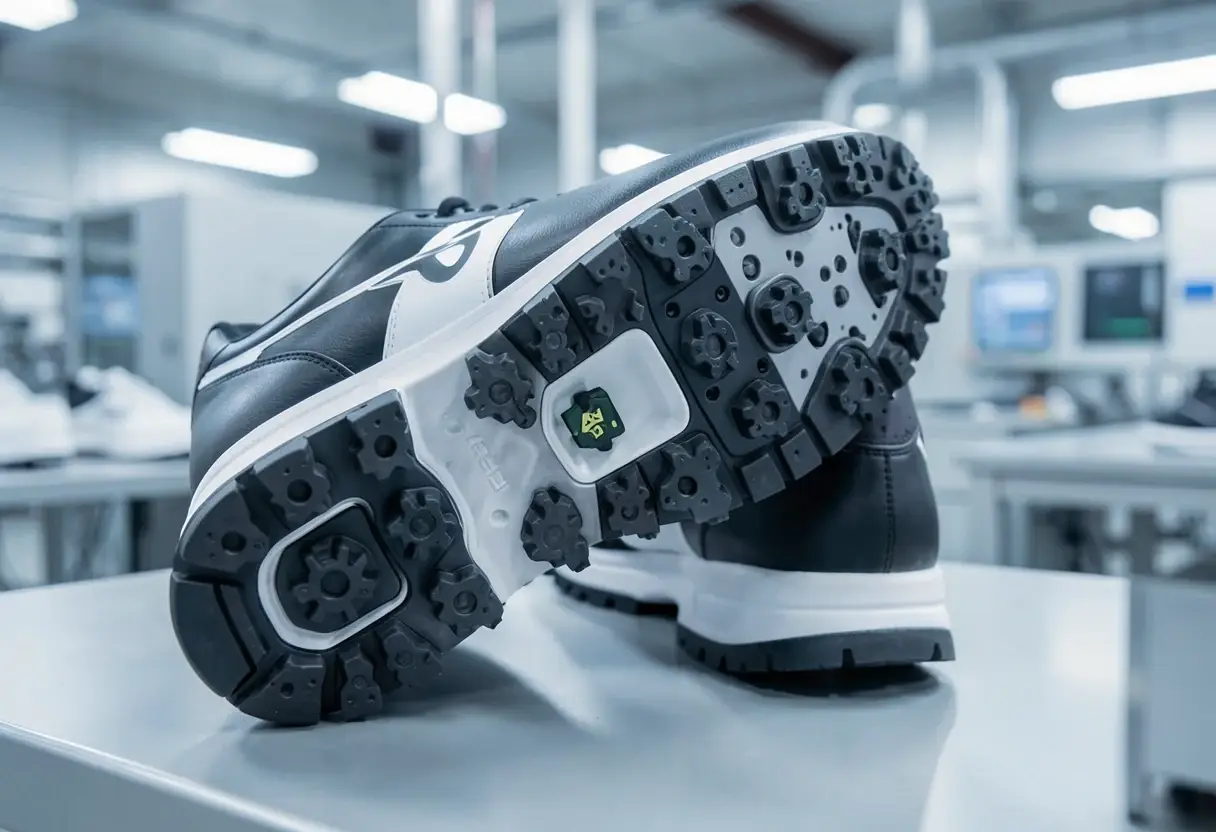
- Pressure-mapped traction. Pressure-mapping technology identified where the greatest forces occur during the swing, and cleats were positioned on the outsole to match those pressure patterns. Supplemental cleats of varying heights, arranged directionally, handle rotational and shear forces.
- Sta-Put lacing. Small silicone nubs molded onto the laces hold them in place once tightened, securing the upper and unifying the connection between foot and shoe.
- Heel-to-arch stabilizer. Testing showed many conventional golf shoes lack torsional support, so Sqairz developed a component running externally from the heel and internally along the arch, following the plantar fascia.
Where are the shoes made?
Sqairz footwear is manufactured in Vietnam and China. Finding the factories was not simple. The company hired an experienced footwear manufacturing consultant to identify, evaluate, and vet potential partners, and while the initial search was straightforward, executing the unique design proved harder.
The square-toe geometry was the biggest hurdle. Footwear manufacturing is built around established lasts, molds, and production processes, and Sqairz was asking factories to build something outside their usual output. Winskowicz said getting the toe-box geometry right while maintaining fit, structure, comfort, and performance required sustained collaboration with manufacturing partners to make the design consistently producible at scale.
What did tariffs do to the business?
The impact was significant, Winskowicz said. The company chose not to raise prices to protect customers, which forced cuts in certain areas and limited investment in new markets — a concrete example of how tariff exposure constrains expansion capital for small footwear brands sourcing from Asia.
How does the outsole change by sport?
Sqairz now sells footwear for golf, baseball, softball, and pickleball. The toe-box geometry stays constant across categories, but each sport gets a sport-specific outsole configuration, because movement patterns, playing surfaces, and force requirements differ. Winskowicz frames the philosophy as "designing performance footwear from the ground up" — understanding the body-ground interaction first, then engineering the shoe around it.
Where is growth coming from?
Growth now includes an entirely different market: medical footwear. Sqairz applied its balance and stability technology to fall risk in an aging population, developed the Sentrx Medical Shoe, submitted the design for Medicare coverage, and was awarded two L-codes. Physicians can now prescribe the footwear for eligible patients at risk of falling.
Distribution is also shifting. The brand is direct-to-consumer, but Winskowicz confirmed it is actively presenting footwear to sporting goods retailers and pursuing wholesale partnerships, arguing consumers often want to try shoes on before buying.
Early demand was built through seeding professional athletes, influencer work, and partnerships with organizations holding targeted email audiences, complemented by paid digital, paid search, streaming TV and video, social media, and experiential marketing events.
For sourcing executives, the takeaway is straightforward: differentiated lasts and geometries still carry a tooling and development premium in Asian factories, and tariff pressure lands directly on small brands' expansion budgets when they refuse to pass costs through. Sqairz's answer — category diversification plus a Medicare-coded medical line — is one template for absorbing both.
via wwd.com (Source)
More from Olivia Hart
Show full bio
Senior reporter covering regulation, policy and their impact on Light industry and softgoods manufacturing at Softgoods Report.
336 articles