Trade & Sourcing PolicyTKT-0AA2
Panama Canal at 33 Slots a Day: Freight Squeeze Is Real but Modest
Panama Canal slots sit at 33 daily versus 18 in Feb 2024, Long Beach set a record 1m TEU September, and carriers openly blank 6% of sailings — not hidden maintenance.
- Cut
- October 27, 2026
- Sew
- 4 min
- Ticket
- TKT-0AA2
Construction
Panama Canal daily crossings ran at 33 as of High Point Market, versus a normal 36-38 and a record low of 18 in February 2024.
Long Beach moved nearly 1 million TEUs in September, its busiest month in 115 years, 25% above September 2025.
Shanghai-Los Angeles spot rates rose 182% year-on-year in August.
Drewry forecast 49 blank sailings, about 6% of scheduled departures, over a recent five-week period.
Section 232 deferred tariff increase takes effect Jan. 1, 2027; a $1.6bn canal reservoir is due to start construction next year.
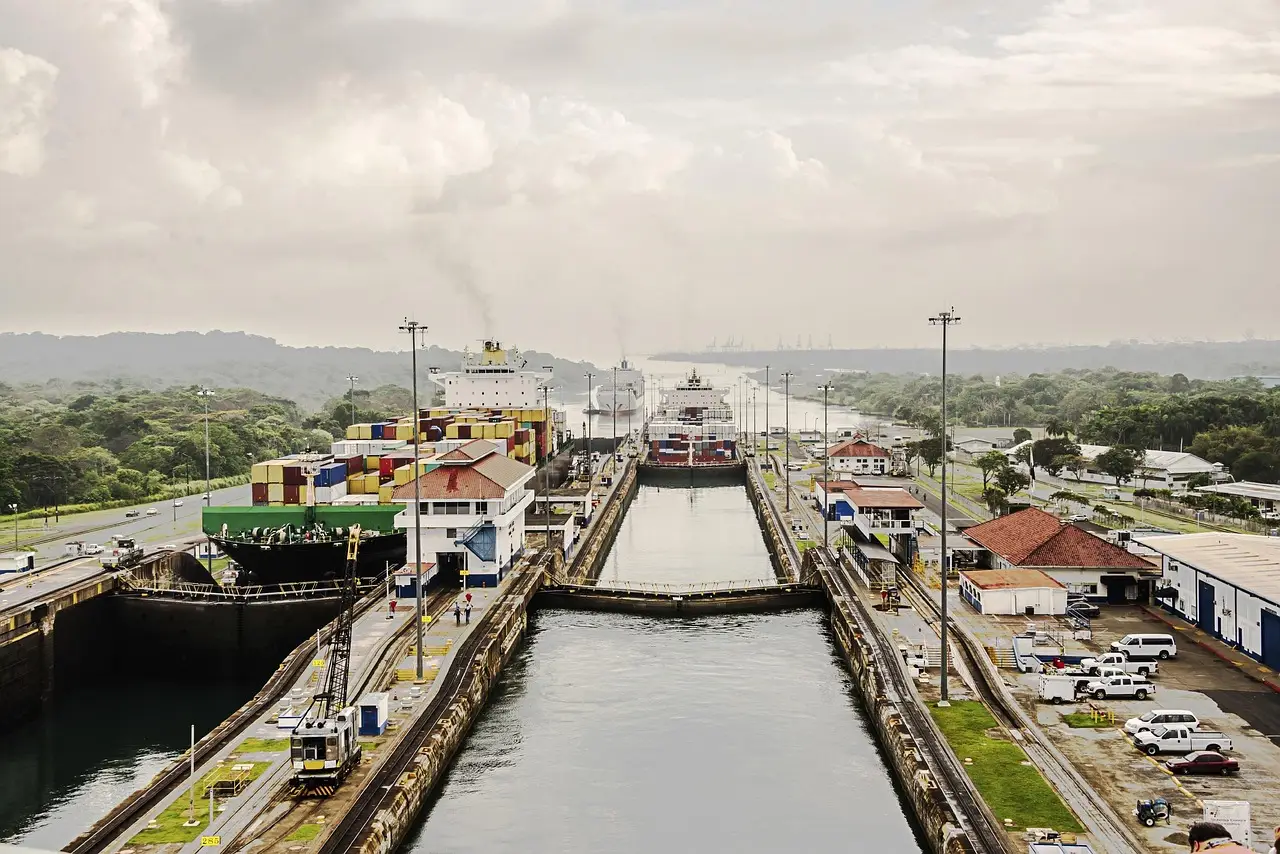
Panama Canal crossings are running at 33 per day, down from the normal 36 to 38, but far above the record low of 18 set in February 2024. That is the hard number behind two rumors circulating ahead of this month's High Point Market: that canal water woes are diverting container traffic to Long Beach, and that carriers are pulling ships under the cover of maintenance. Both rumors contain a grain of truth. Neither holds up as a full account of the freight market.
What is actually happening at the canal?
Drought linked to El Niño lowered Gatún Lake, the canal's water source, and forced authorities to cut crossing numbers and sometimes cargo weight. Daily slots fell to 32 in September and stood at 33 as of High Point Market, according to Trans-Border Global Freight. Canal authorities began saving water in December in anticipation of El Niño. September rains then lifted Gatún Lake slightly above its 10-year average, Hellenic Shipping News reported.
The mechanics are simple. Every crossing sends roughly 50 million gallons of fresh water out to sea, according to a United Nations-administered website. Only rain refills the lake, which also supplies drinking water to about half of Panama's population. Wet seasons in 2024 and 2025 refilled the lake and restored full capacity last year.
The pattern of dry years is tightening, though. Canal officials cite dry rainy seasons in 2016, 2019 and 2023, against a historical frequency of once every 15 to 20 years. The takeaway: canal capacity now swings with El Niño cycles, and importers should plan for that rhythm.
Is the traffic shift to Long Beach real?
Yes, and the numbers are records. The Port of Long Beach posted its busiest month in its 115-year history in September, moving nearly 1 million TEUs, 25% above September last year, Container News reported. The Port of Los Angeles handled more than a million TEUs, beating its July 2025 record by more than 20,000 units, according to MyNewsLA.com.
Long Beach CEO Noel Hacegaba cited Panama access restrictions as one driver of the record. The reroute carries costs. Spot rates on Shanghai–Los Angeles rose 182% in August against a year earlier. Long Beach also requires rail connections inland, adding further expense, even though under normal conditions it is faster than the all-water route into Savannah or Charleston, which runs 28 to 35 days from Asia.
Are carriers hiding capacity cuts as maintenance?
No. The capacity management is open, not disguised. Carriers cancel sailings outright, a practice the industry calls blank sailing. Freightos' head of research said in May that carriers were getting more aggressive about capacity management to defend rates amid weak demand growth, high fuel costs and geopolitical disruption. One container line blanked 10% to 14% of scheduled capacity on four key east-west trades in the first half of 2026.
Drewry forecast 49 blank sailings over a recent five-week stretch, about 6% of scheduled departures, mostly on eastbound transpacific routes. In short, carriers ordered new ships but cancelled sailings faster than they added them. Actual idling and drydocking are non-factors: idling affects less than 1% of the global fleet, and drydocking has dropped back under 1% of capacity, described as exceptionally low by Ship & Bunker.
What should importers do now?
Canal warnings arrive in a predictable order: rainfall changes, lake levels drop, draft notices follow, then slots are cut and queue prices rise. A draft notice gives a two- to four-week warning that eastbound capacity will tighten, so track the authority's advisories. Watch El Niño, which forecasters expect to peak around the first of the year, just before Panama's dry season.
Budget for surcharges by asking carriers and forwarders how canal changes will alter landed-cost pricing. The deferred Section 232 tariff increase takes effect Jan. 1, 2027, so expect a pre-deadline import surge on top of tight capacity. Longer term, the canal authority plans to start construction next year on a $1.6 billion reservoir it says will secure water supply for 50 years. The sourcing decision now: lock in capacity and landed-cost assumptions before January's deadline convergence of tariffs and El Niño.
via preventionweb.net (Original)
More from Priya Raman
Show full bio
News editor covering people, launches and day-to-day practice in Light industry and softgoods manufacturing at Softgoods Report.
299 articles