Apparel Manufacturing & SourcingTKT-1C73
Madhya Pradesh pitches textile machinery makers in Barcelona
Madhya Pradesh's Chief Minister met textile machinery manufacturers in Barcelona, courting the equipment tier that determines where new textile capacity is built across India's competing states.
- Cut
- September 27, 2026
- Sew
- 2 min
- Ticket
- TKT-1C73
Construction
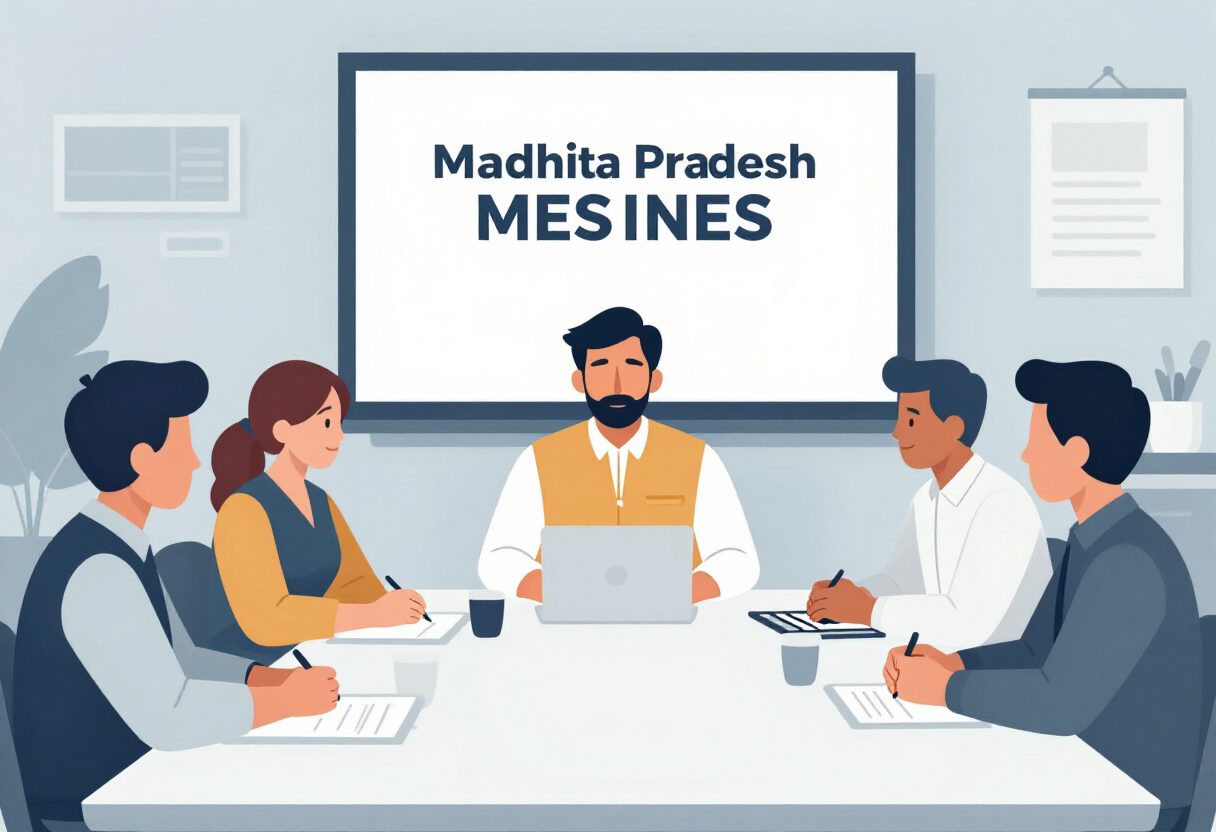
Madhya Pradesh's Chief Minister held a meeting with textile machinery manufacturers in Barcelona.
No investment figures, machinery supply agreements or plant timelines were disclosed from the meeting.
The outreach targets the capital-equipment tier of the textile supply chain, positioning Madhya Pradesh in India's inter-state competition for textile capacity investment.
Madhya Pradesh's Chief Minister held a meeting with textile machinery manufacturers in Barcelona, an outreach that signals the Indian state's push to position itself in the capital-equipment tier of the textile supply chain rather than compete only on garment assembly and fibre output.
The meeting took place in Barcelona, one of Europe's established hubs for textile machinery technology and trade facilitation. For sourcing executives, the significance lies less in the venue than in the target audience: machinery manufacturers control the upstream capability that determines what a region's mills can actually produce — spinning capacity, weaving technology, finishing lines and technical-textile equipment.
A state-level political delegation meeting equipment suppliers directly is a familiar play in India's inter-state competition for textile investment. States such as Tamil Nadu, Gujarat, Maharashtra and Telangana have each courted mill projects with subsidies, power tariffs and industrial park allocations. Madhya Pradesh has been working to expand its share of that pipeline, promoting itself to investors on land availability, cheaper labour costs relative to coastal clusters, and policy incentives for textile and apparel manufacturing units.
What remains unconfirmed at this stage is whether the Barcelona discussions produced any concrete commitments — investment figures, machinery supply agreements or plant timelines were not disclosed in the initial reporting on the meeting. Until a specific buyer-supplier or state-investor commitment is announced, the encounter should be treated as pipeline development: a government-to-industry overture aimed at European machinery suppliers whose order books influence where new textile capacity gets built.
For brands and sourcing houses placing orders in India, machinery-sector interest in a state matters for a practical reason. New equipment investment tends to precede new capacity, and new capacity in states outside the traditional southern and western clusters widens the base of audited, compliant suppliers available for allocation decisions. Regions that modernise their equipment stock are also better positioned to meet the product-quality and traceability requirements that European buyers increasingly write into their supplier codes, in line with regulations such as the EU's textile sustainability and due-diligence measures.
The meeting also fits a broader pattern of Indian states courting foreign capital-equipment producers as they seek to move up the value chain from basic spinning and weaving into technical textiles, nonwovens and higher-specification fabrics. Machinery partnerships, joint ventures or localised servicing operations are the mechanisms through which that upgrade typically happens.
Sourcing teams watching India as a China-plus-one destination should read the Barcelona meeting as an early indicator of where Madhya Pradesh wants to sit in that competition. The decision it forces is straightforward: monitor whether the state converts this equipment-maker outreach into announced capacity projects, and factor Madhya Pradesh's investment pipeline into India sourcing allocations before competitors lock in the first wave of suppliers built on the new machinery.
via Google News: Textile machinery and sewing automation (Source)
More from Priya Raman
Show full bio
News editor covering industry trends and analytics at Softgoods Report.
86 articles