North Carolina textile recycling cluster to sort 16m kg a year
NIR sorting equipment with 16 million kg annual capacity starts at UpCycle Fiber and Goodwill NWNC in early 2027, feeding mechanical recycling and circular yarn spinning in North Carolina.
- Cut
- November 23, 2026
- Sew
- 3 min
Construction
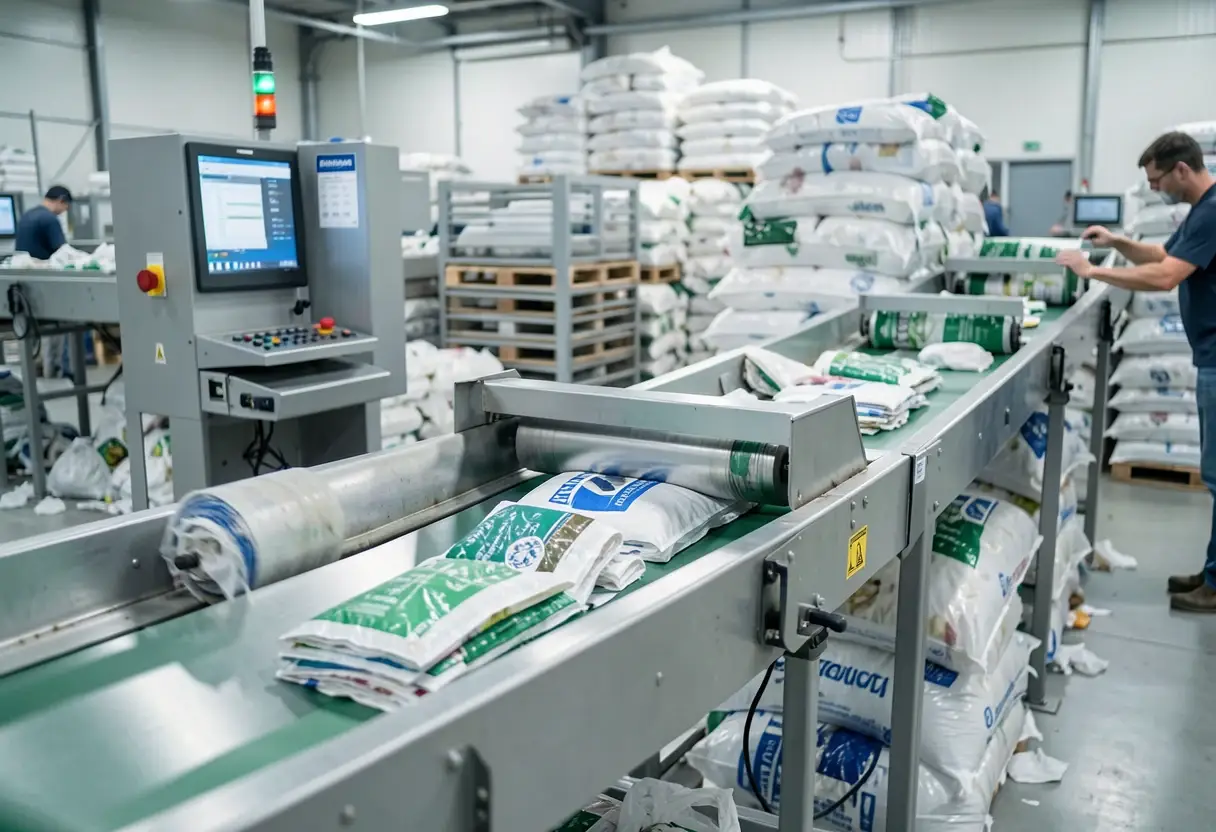
Sorting systems at UpCycle Fiber and Goodwill NWNC start operating in early 2027.
Full capacity is up to 16 million kg of material per year; Goodwill already handles over 14 million kg annually.
NIR spectroscopy sorts textiles against up to 20 attributes including fibre composition and colour.
Funding comes from the National Science Foundation Textile Innovation Engine plus public, private and organisational partners; totals undisclosed.
Textile sorting equipment with a nameplate capacity of 16 million kg per year will go live in North Carolina in early 2027, according to the NSF Textile Innovation Engine. The systems will be installed at UpCycle Fiber and Goodwill Industries of Northwest North Carolina.
The project joins four regional operators into one chain: collection, resale, automated sorting, mechanical recycling and yarn or nonwoven manufacturing. Material Return and The Industrial Commons contribute fibre recovery and circular spinning capacity to the wider system.
What does the sorting equipment actually do?
The systems use near-infrared spectroscopy and automated sorting to identify textiles against as many as 20 attributes, including fibre composition and colour. The partners claim this data will direct non-resellable material toward its highest-value next use — recycling or feedstock for new products.
That claim rests on throughput figures not yet demonstrated. The 16 million kg figure is a full-capacity estimate; the partners have not published ramp-up targets or yield rates for the first operating year.
Goodwill Industries of Northwest North Carolina already manages more than 14 million kg of textile material each year. Resale stays the preferred route for donated goods. The new sorting capability covers only what cannot re-enter that stream.
President and CEO Barbara Maida-Stolle said: "Our first goal is always to find the highest and best use for donated products, and for textiles that means keeping them in use through resale for as long as possible. This new equipment gives us the ability to sort the remaining textiles by content to direct those textiles toward responsible recycling and new material pathways."
Where does the recovered fibre go?
UpCycle Fiber will break down recovered textiles into fibre for nonwoven materials and yarn development at its own facilities. The company combines mechanical recycling with nonwoven manufacturing, which it says enables greater use of recovered material in new products.
Support from the NSF Textile Innovation Engine is expected to help develop distinct fibre streams for spinning and nonwoven uses. Separating streams by fibre type is the technical precondition for selling recovered fibre into spinning supply chains rather than lower-value applications.
Co-founder and COO David Culp framed offtake, not collection, as the binding constraint. He said: "The challenge is not simply collecting textile waste or finding ways to process it. The real challenge is creating reliable offtake for the recovered fibre. Trying to force this fibre into existing markets and compete with established materials is not a long-term strategy for success. We need to engineer new products and applications that can consume this feedstock at scale and create real value from it. That is what we are building at UpCycle Fiber."
Who supplies the spinning capacity?
Material Return, backed by The Industrial Commons, handles fibre recovery and circular yarn spinning, particularly for natural fibres through mechanical recycling. The company processes both post-consumer and post-industrial sorted textiles and converts them into tailored recycled yarns.
The partners describe the result as an integrated pathway linking collection, sorting, processing and manufacturing — one no single organisation could deliver alone. That framing is theirs, not independently verified.
Funding includes support from the National Science Foundation through the Textile Innovation Engine, plus contributions from public, private and organisational partners. The partners have not disclosed the split or the total investment.
Anne Wiper, chief executive of the NSF Textile Innovation Engine, said the collaboration connects collection, resale, sorting, processing and manufacturing across the region.
"Goodwill Industries of Northwest North Carolina brings deep expertise in collection and resale, UpCycle Fiber brings innovation and expertise in nonwovens, and Material Return brings expertise in mechanical recycling and customised circular yarn production. By connecting those strengths and leveraging advanced technologies, we can keep more material in use and create textile to textile solutions," Wiper said.
What does this change for sourcing teams?
Buyers of recycled yarn and nonwovens gain a US Southeast supplier cluster with attribute-level sorting and traceable fibre streams from 2027. The open question is price and volume: until offtake contracts and first-year yields appear, treat the 16 million kg capacity as a design figure, not a supply commitment.
via just-style (Source)
More from Tom Whitfield
Show full bio
Staff writer covering companies, deals and strategy in Light industry and softgoods manufacturing at Softgoods Report.
380 articles