Sustainability & ComplianceTKT-436D
Nordic textile trackers expose downstream traceability gaps
Digital trackers in 200 discarded textiles from five Nordic countries show heavy reliance on European sorting hubs, weak downstream traceability and growing EPR pressure on brands.
- Cut
- November 18, 2026
- Sew
- 3 min
- Ticket
- TKT-436D
Construction
Eunomia and Mepex placed 200 digital trackers in discarded textiles from Denmark, Finland, Iceland, Norway and Sweden.
71% of tracked garments were last recorded in Europe; Poland accounted for 30% and Slovakia for 18%.
Recorded endpoints split 66% inside the EU or EEA and 34% outside.
After initial sorting, redistribution reached Asia-Pacific (18%), Africa (9%) and the Middle East (3%).
Changes to ESPR, the Waste Framework Directive and EPR are expected to increase used-textile volumes.
By Tom Whitfield
Seventy-one percent of tracked garments were last recorded in Europe in a study using 200 digital trackers; Poland led at 30% and Slovakia at 18%.
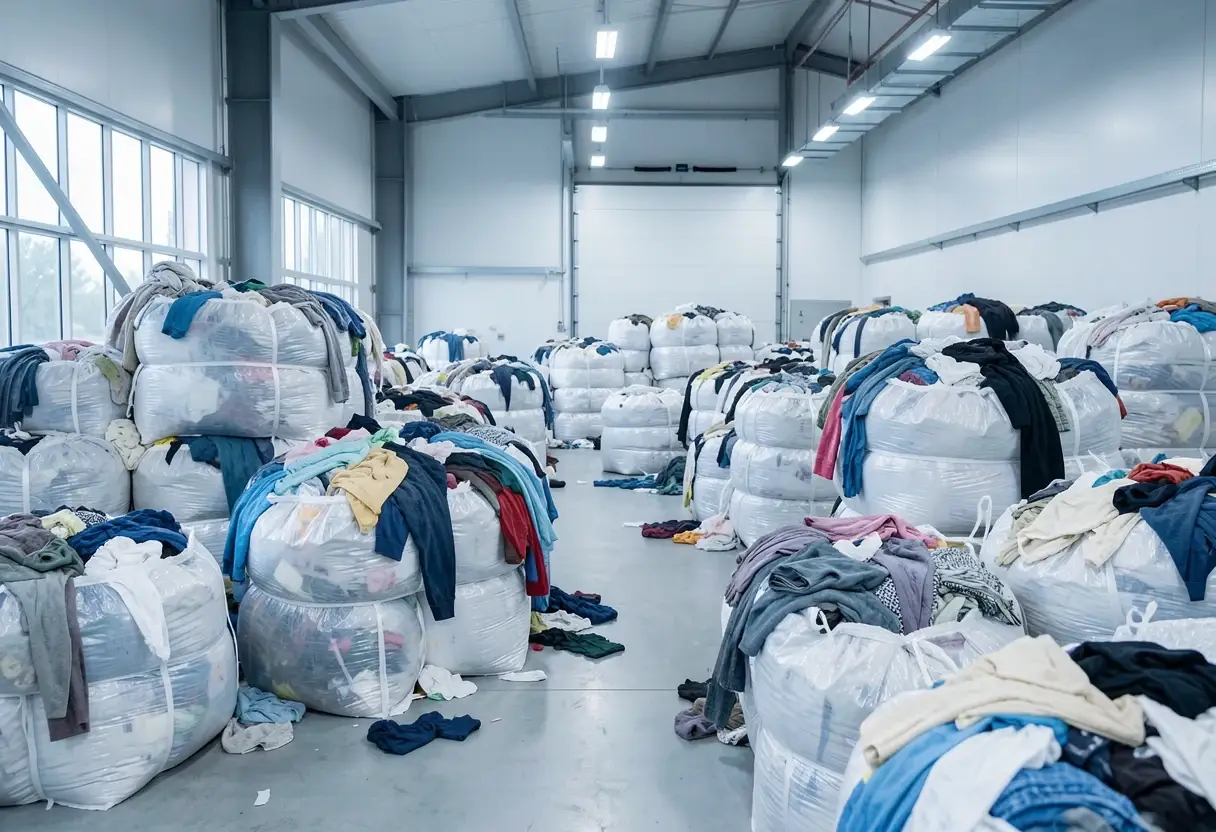
Eunomia Research & Consulting Ltd and Norwegian consultancy Mepex placed the trackers in discarded textiles from Denmark, Finland, Iceland, Norway and Sweden. The project sought information normally obscured by complex supply chains. Other tracked garments travelled as far as Mozambique, India and Nigeria.
That distinction matters. “Last recorded” is not the same as a confirmed final endpoint. The research found that traceability declined significantly after the first sorting stage, so customs data cannot establish where most exported items finish.
Where does the export chain lose visibility?
High labour costs push Nordic countries to export most textiles unsorted. The principal destinations are European countries with established sorting industries, including Poland, Slovakia, Lithuania, Bulgaria, Estonia and Germany.
Sorting plants use specialist grading to assess garment condition and select an onward route for reuse, repair, remanufacturing or recycling. These European hubs occupy a central position in the global used-textiles value chain. Their first-stage role is clear. The records do not establish their control over later movements.
Trade statistics show only the first destination, not the ultimate end use. The research found subsequent redistribution to:
- Asia-Pacific: 18%
- Africa: 9%
- Middle East: 3%
Some tracked garments reached second-hand clothing markets where used-clothing imports are prohibited, including Nigeria. The report does not explain how those imports occurred or provide the full movement history. That omission matters for enforcement.
Overall, 66% of tracked items had a recorded endpoint inside the EU or European Economic Area. The remaining 34% ended up outside those borders. The 71% Europe figure and 66% EU or EEA figure measure different stages, not conflicting shares.
The report says these gaps have important implications for the EU textile value chain as it adjusts to waste-export requirements and extended producer responsibility.
What does this change for brands and retailers?
Regulatory changes are expected to increase the volume of used textiles entering the supply chain. The Ecodesign for Sustainable Products Regulation, revisions to the Waste Framework Directive requiring separate textile collection, and Extended Producer Responsibility will all contribute to that pressure.
Quality could limit reuse. A growing share of incoming textiles is likely to be lower quality, partly because of the rise of ultra-fast fashion. More garments will reach the end of their first life unsuitable for reuse. The sector still relies on non-European markets to handle its lowest-grade textiles and recycling material.
Vita Ellis, sustainability consultant at Eunomia Research & Consulting Ltd, said:
“Europe is entering a new era of textile accountability, and the UK cannot afford to watch from the sidelines.”
She also said:
“This new research shows that better traceability is becoming a business necessity, not just a regulatory requirement, including for UK brands and retailers selling into the EU, who will have to comply with textile EPR schemes there.”
Ellis warned that traceability alone will not create a circular textile system. As collection volumes rise and product quality declines, textile quality and durability must improve alongside collection rates.
The unresolved capacity question is where growing volumes will be sorted and reprocessed. European hubs currently handle the first stage, while non-European markets absorb the lowest grades. The cited findings provide no forecast for additional European sorting or recycling capacity.
UK textile EPR has still to be legislated. The research gives the country time to learn from Nordic evidence, but the source provides no implementation date. Any claim that European capacity alone will replace non-European reprocessing remains unproven.
EU-facing brands and retailers should extend their records beyond the first sorting country, prepare for EPR compliance, and qualify European and non-European reprocessors for lower-grade material. They cannot treat the first export destination as proof of end use. That is the sourcing and compliance decision forced by the study: document the route after sorting, or accept a widening accountability gap.
via just-style (Source)
More from Tom Whitfield
Show full bio
Staff writer covering companies, deals and strategy in Light industry and softgoods manufacturing at Softgoods Report.
366 articles