Sustainability & ComplianceTKT-B1C7
Nine dead in gas explosion at Bangladesh textile factory
Nine workers died and others were injured in a gas explosion at Pretty Composite Textiles in Ashulia; police accuse 10-12 staff of unsafe handling of flammable materials.
- Cut
- September 28, 2026
- Sew
- 3 min
- Ticket
- TKT-B1C7
Construction
Nine workers killed in explosion and fire at Pretty Composite Textiles Ltd, Ashulia, Savar, on 20 September.
RSC engineers' preliminary assessment points to a spark from an electrical line igniting LPG or CPG gas near the factory boundary.
Police have filed a case naming six factory officers and staff, with 10-12 individuals accused of unsafe handling of flammable materials.
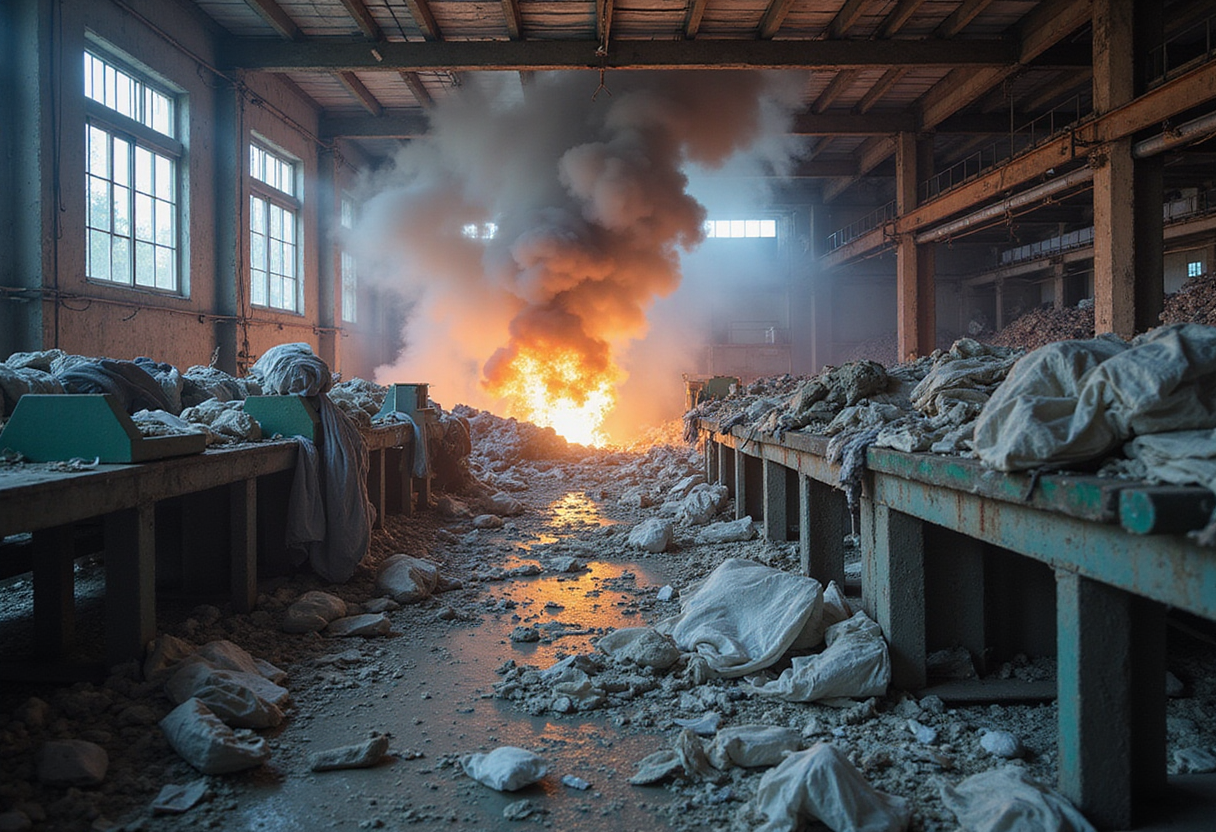
An explosion and fire at Pretty Composite Textiles Ltd in Ashulia, Savar, killed nine workers on Sunday, 20 September, and injured an undisclosed number of people, according to the International Accord.
Preliminary assessments by engineers from the RMG Sustainability Council (RSC), together with eyewitness accounts and discussions with factory management and Safety Committee members, suggest the incident started with a spark from an electrical line near the factory's boundary. The spark likely ignited gas — possibly LPG or CNG — triggering the explosion and subsequent fire. The blaze then spread into a nearby parking zone, damaging a number of parked vehicles, the International Accord reported.
The RSC has pledged to maintain oversight of conditions in the affected area.
Enforcement action underway
Police have filed a formal case in connection with the incident. Authorities allege the explosion resulted from unsafe and unplanned handling of flammable materials. The case names six factory officers and staff, with a total of 10 to 12 individuals facing accusations.
According to local newspaper The Daily Star, the families of three of the deceased have not yet initiated legal proceedings of their own.
In a statement shared on social media, Pretty Composite Textiles said it is providing financial support to the families of the deceased, channelled through the Bangladesh Garment Manufacturers and Exporters Association (BGMEA).
Industry bodies respond
Both the RSC and the International Accord stressed that maintaining safe working conditions remains a joint responsibility.
"We reaffirm our dedication to working with all relevant stakeholders and partners to build and maintain a culture of health and safety that prevents such tragedies within the RMG sector in Bangladesh," the two bodies said in a joint statement.
The International Accord added: "We extend our deepest condolences to those killed and injured in the gas cylinder explosion and fire at Pretty Composite Textiles Ltd in Ashulia, Savar on Sunday, 20 September. Our thoughts are with the victims, their families, and all those affected by this incident."
BGMEA president Mahmud Hasan Khan said the association's immediate focus is on the victims. "Standing beside the injured people and affected families is our first and foremost priority at this moment of crisis," he said. The association extended sympathy to the families of the deceased and expressed hope for the recovery of the injured.
Pattern of safety failures
The Ashulia deaths follow a lethal fire at a garment factory in Dhaka last year that killed at least 16 people. At the time, the International Accord on Factory Safety told Just Style the incident served as a "stark reminder of the devastating human cost of inadequate safety measures."
The latest incident puts two of the sector's core compliance mechanisms — the RSC, which took over Accord inspections in Bangladesh, and the International Accord itself — back at the centre of factory safety enforcement in the country's readymade garment and textile supply base. Early evidence points to gas cylinder storage and electrical infrastructure at the factory boundary, areas covered under fire and building safety remediation programmes that suppliers must keep current.
For buyers sourcing from Bangladesh, the case reinforces the need to verify that supplier facilities maintain up-to-date electrical and hazardous-materials remediation, not only structural standards. With police accusations now naming individual factory officers, sourcing teams should also track whether named suppliers face legal exposure that affects continuity of production at affected sites.
via thedailystar.net (Original)
More from Priya Raman
Show full bio
News editor covering industry trends and analytics at Softgoods Report.
86 articles