Textile Mills & FibersTKT-975B
Indonesia Bets $6.4 Billion on Textile Rebirth and Circular Supply Chains
Indonesia's garment sector grew 6.36% as Jakarta plans $6.4 billion in investment and CFP Indonesia traced 4,300 tons of post-industrial textile waste digitally.
- Cut
- October 30, 2026
- Sew
- 4 min
- Ticket
- TKT-975B
Construction
Indonesia's textile and apparel industry grew 6.36% year over year in Q2 2026, up from 4.35% a year earlier.
The government targets 100 trillion rupiah ($6.4 billion) in investment and top-five producer status by 2030.
CFP Indonesia assessed 29 companies and made 4,300+ tons of post-industrial textile waste digitally traceable since October 2024.
Only 24 percent of assessed companies validated the final disposal method for their textile waste.
A labor protection law passed on Oct. 6 may affect operations and competitiveness, per Busana Apparel Group.
Indonesia's textile and apparel industry grew 6.36 percent year over year in the second quarter of 2026, up from 4.35 percent a year earlier, and Jakarta is backing the momentum with a 100 trillion rupiah ($6.4 billion) investment framework targeting a place among the world's top five textile and garment producers by 2030.
The industry employs roughly 4 million people. Exports total about $12 billion, split between $3.1 billion in textiles and $8.7 billion in apparel. President Prabowo Subianto has directed officials to establish a new state-owned enterprise and to invest alongside Danantara, the sovereign wealth fund.
What does the government's plan actually contain?
Coordinating Minister for Economic Affairs Airlangga Hartarto framed the ambition in midstream terms. "We will rebirth the industry in the midstream," he said, noting that fabric production, yarn manufacturing, printing, dyeing and finishing have been "somewhat disconnected." He put textile factory utilization at around 75 percent.
The Industry 4.0 framework sets two hard targets: 500,000 new textile and apparel jobs by 2030 and 1.3 million tons of eco-friendly domestic clothing fibers by 2030, centered on expanded polyester production and integrated supply chain ecosystems across Central and West Java. The plan also aims to cut a trade deficit that includes an estimated $4.56 billion in raw fabric imports. No sourcing shift has been confirmed yet. The targets remain policy statements, not signed orders.
Where is the money showing up?
Apparel investment reached 4.63 trillion rupiah (about $264 million) between Jan. 1 and June 30, against 4.14 trillion rupiah (roughly $236 million) in the same period of 2025 — a real but modest increase.
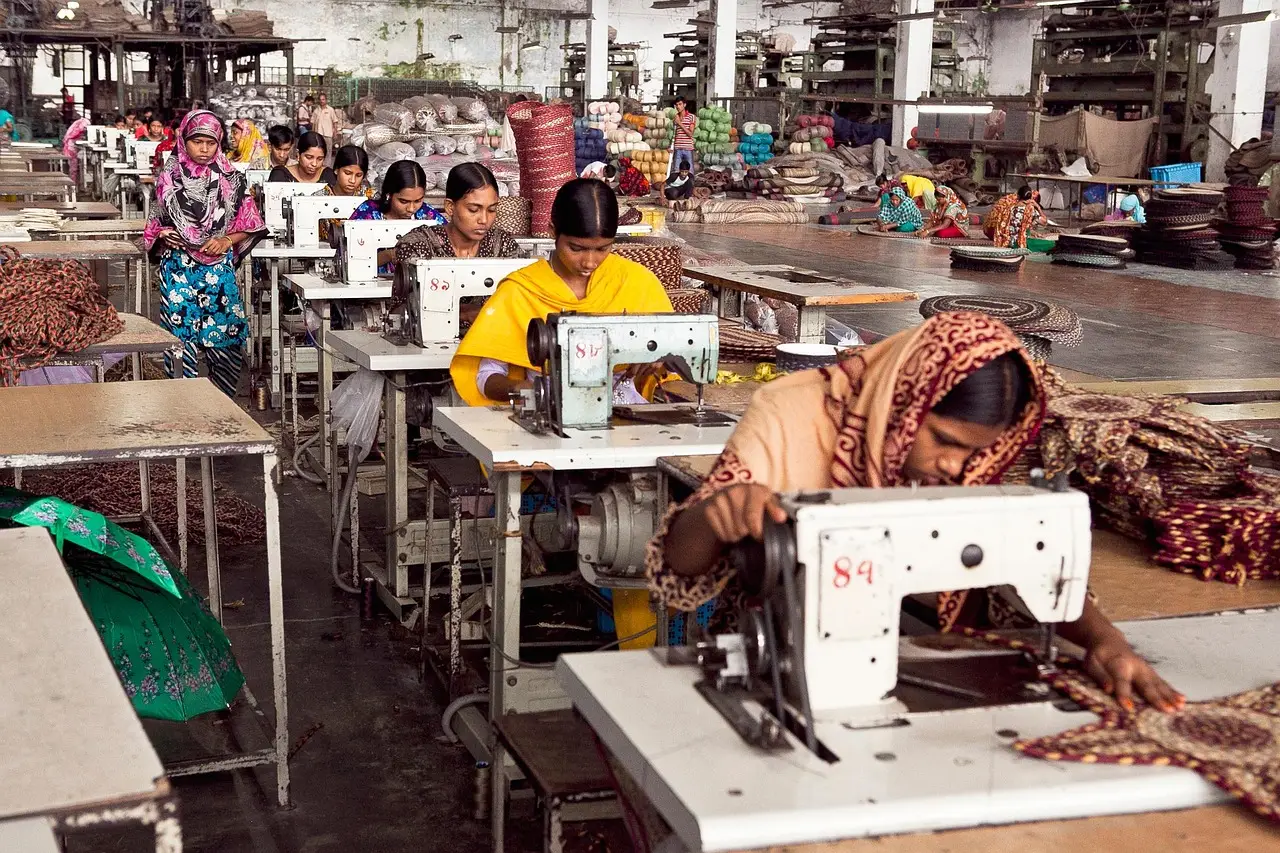
Busana Apparel Group, one of Indonesia's largest export-oriented garment manufacturers with annual turnover above $500 million and more than 55 million pieces produced annually across dozens of facilities, confirmed expansion on the ground. "We have also observed a good number of new garment factories opening, particularly in Central Java and West Java," a spokesperson told Sourcing Journal. The company is expanding capacity at several facilities and investing in automation, equipment upgrades and a digital shop-floor control system offering "real-time visibility of production."
One caveat sits inside the company's own statement. The labor protection law passed by parliament on Oct. 6 "may affect our operations and competitiveness," the spokesperson said. Competitors in Bangladesh and Vietnam still benefit from lower wages and more modernized infrastructure.
What did the Circular Fashion Partnership achieve?
The Circular Fashion Partnership (CFP) Indonesia, led by Global Fashion Agenda with Rantai Tekstil Lestari (RTL) and implementation partners Reverse Resources, Closed Loop Fashion and the Circular Economy Foundation, and funded by the H&M Foundation plus private contributions, concludes this month after two years.
"Since its launch in October 2024, CFP Indonesia has engaged seven international brands, assessed 29 companies, enabled more than 4,300 tons of post-industrial textile waste to become digitally traceable," RTL chairman Basrie Kamba told Sourcing Journal.
The compliance picture is less flattering. At the start, 64 percent of the 29 companies believed their waste went to preferred disposal routes — reuse, recycling, upcycling or downcycling. Only 24 percent validated the final disposal method actually used. Verification of downstream handling remains largely outside manufacturers' control, with limited third-party mechanisms in place.
More than 70 percent of participants improved waste storage areas during the program — clear signage, separation by category, reduced contamination. Busana reported most companies assessed by Closed Loop Fashion now separate waste by type and color at source, with better recycling partners identified and less material going to landfill or energy recovery. Much of it is still downcycled, though into higher-value products than before.
Can waste become feedstock at scale?
Reverse Resources estimates Indonesia generates 874 kilotons of recyclable textile waste annually. GFA judged the country a "significant opportunity to develop a local textile recycling industry due to the large volumes of feedstock materials available," given a developed vertical supply chain and a supportive policy environment.
"Circularity becomes practical when it works for manufacturers' bottom lines," said Christina Iskov, GFA's director of impact. She pointed to a proposed Multi-Stakeholder Platform as the vehicle for keeping generators and recyclers connected beyond the program.
Busana named three next steps: scaling practices from partner companies to the industry, improving traceability through a digital platform visible to recyclers and investors, and adopting advanced sorting for blended fabrics. "Much still needs to be done," the spokesperson said. Kamba was blunter: "We have some homework to do with the banks, the government, and the private sector."
For buyers weighing Indonesia against Vietnam or Bangladesh, the decision now hinges on whether factory utilization, the new labor law's cost impact and verified waste traceability move together before 2027 order books are set.
via Sourcing Journal (Source)
More from Tom Whitfield
Show full bio
Staff writer covering companies, deals and strategy in Light industry and softgoods manufacturing at Softgoods Report.
338 articles