Apparel Manufacturing & SourcingTKT-E6A2
HANDA scales Bangladesh investment to $250m with knitting and dyeing phases
Hengtian's HANDA lifts its Bangladesh commitment to about US$250m across three phases, adding integrated knitting and dyeing to garment capacity for premium brand buyers.
- Cut
- September 30, 2026
- Sew
- 4 min
- Ticket
- TKT-E6A2
Construction
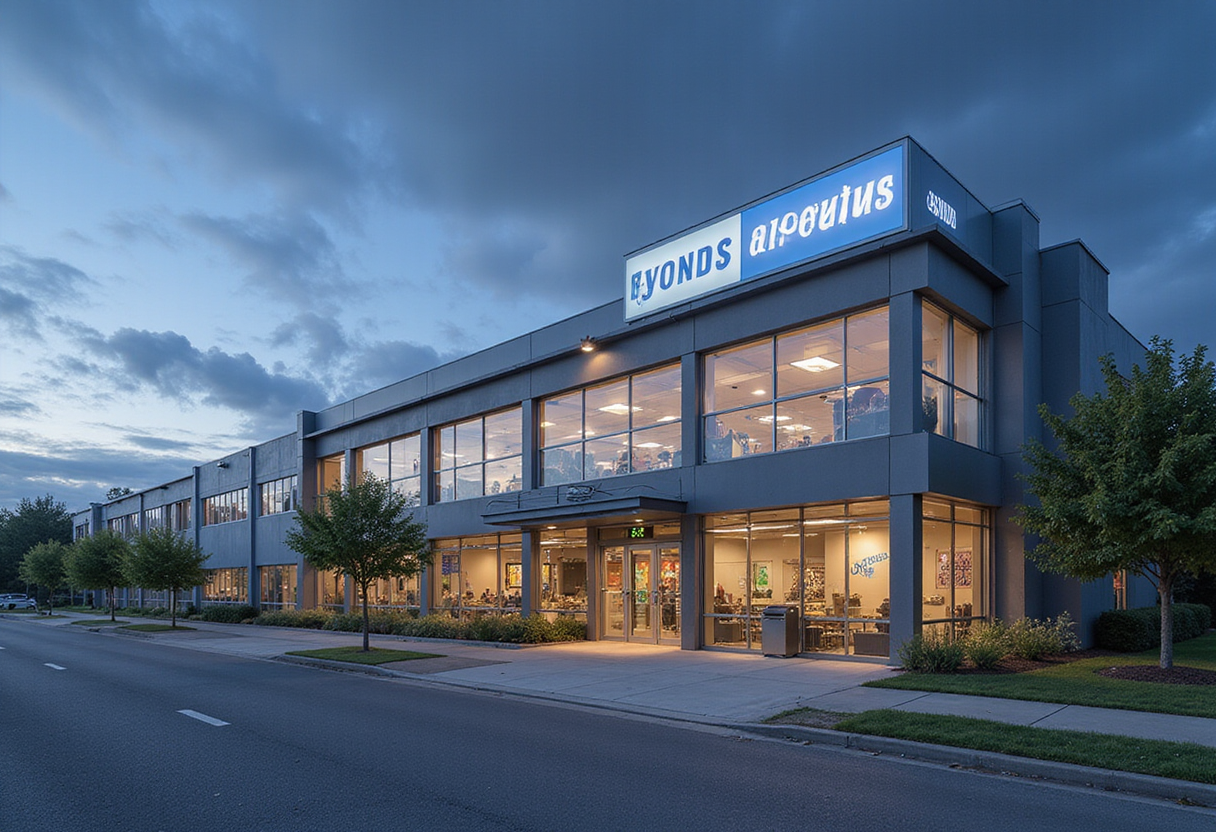
HANDA expanded its Bangladesh investment plan to approximately US$250 million, supported by BIDA, BEZA and BEPZA
Phase one garment capacity is operational; phase two is under construction; phase three — confirmed, with land preparation underway — adds integrated knitting and dyeing
The group positions Bangladesh as a long-term integrated manufacturing base, not a low-cost location, within a multi-country network spanning knitting, dyeing and garmenting
HANDA, the garment manufacturing arm of China's Hengtian Enterprise, has expanded its planned investment in Bangladesh to approximately US$250 million, up from an original smaller commitment, according to Jiang Yanhui, Vice President of Hengtian Enterprise, speaking at Intertextile Shanghai 2026.
The decision to raise the figure followed market assessment and negotiations with Bangladeshi authorities, including support from the investment agencies BIDA, BEZA and BEPZA. Jiang, who previously served as General Manager of Hengtian subsidiary Wuxi Gedi Garments and took his current leadership roles in 2020, framed the increase as a bet on Bangladesh as a long-term manufacturing base rather than a low-cost stopgap.
Three phases, integrated capacity
The Bangladesh build-out runs in three phases. Phase one is complete and has established initial garment manufacturing capacity. Phase two is under construction and will significantly expand garment output. Phase three is confirmed, with land preparation underway; it extends the site into integrated knitting and dyeing, moving HANDA upstream from cut-make into textile production on Bangladeshi soil.
Once all three phases finish, HANDA will operate a combined textile-and-garment platform in the country — a vertically integrated footprint that few Chinese investors have committed to at this scale in Bangladesh. Jiang said HANDA wants the investment to bring integrated manufacturing, advanced technology, management systems and higher-value-added production to the country's industry.
Why diversify now
The expansion sits inside a broader multi-country manufacturing model spanning the textile value chain from knitting and dyeing to garmenting. Jiang said the logic is straightforward: global customers now weigh speed, quality, flexibility, sustainability, compliance and supply-chain stability alongside price, and those requirements differ by market and product.
Each HANDA base carries different strengths in cost, capacity, location and product capability, which lets the group allocate orders across sites and reduces dependence on any single country or factory. "Globalization is not simply about expanding capacity," Jiang said. "It is about building a manufacturing network that can respond faster and provide customers with more reliable and competitive solutions."
For sourcing teams at premium brands, that model offers a hedge against disruption in any one country — the same resilience logic that has pushed buyers to dual-source across China, Bangladesh, Vietnam and elsewhere since the pandemic and the 2024–25 tariff shocks.
What premium buyers now demand
Jiang was blunt about the bar for suppliers to premium global brands. Quality and compliance remain the foundation but no longer differentiate. Buyers expect product development, technical expertise, fast response and reliable delivery on top.
Product development stands out as the sharpest shift. A competitive manufacturer cannot wait for brands to hand over specifications, he argued. Suppliers must understand market trends, fabrics, functionality and manufacturing technology well enough to propose solutions proactively. Speed compounds the pressure: shorter development cycles and lead times demand tighter coordination between design, development, sourcing, production and logistics.
"The most competitive manufacturers will be those that can combine quality, innovation, speed, compliance and supply-chain management into one integrated capability," Jiang said.
University ties as an R&D channel
HANDA anchors its innovation pipeline in a partnership with Jiangnan University, one of China's leading textile institutions. Jiang described the collaboration as a two-way exchange: companies bring real production problems to academic teams, universities supply scientific analysis, new materials and processes, and the company validates solutions on the factory floor.
The group wants the relationship to run beyond individual research projects into a standing platform linking research, technology development, industrial application and talent development. The measure of success, he said, is when laboratory work becomes measurable improvement in quality, efficiency, cost, sustainability or product innovation.
That talent agenda reaches into recruitment. HANDA now seeks engineers who combine textile expertise with automation, digitalisation, data analysis and sustainability knowledge, and managers with cross-cultural and supply-chain skills. Jiang noted that production problems rarely stay within one department — a single issue can touch materials, planning, quality, cost and customer requirements simultaneously — so graduates need whole-value-chain perspective, not narrow technical training.
The sourcing decision
The news forces two calculations on sourcing heads. First, buyers needing vertically integrated knit-to-garment capacity in South Asia can now shortlist a Chinese-owned, Bangladesh-based supplier with a confirmed expansion path, US$250 million behind it and government agency backing. Second, brands consolidating volumes with fewer, higher-capability suppliers will find in HANDA's model — multi-country allocation plus in-house development — exactly the integrated vendor profile Jiang says the market now rewards. Compliance teams should track the phased build-out against their own audit timelines as new capacity comes online.
via textiletoday.com.bd (Original)
More from Olivia Hart
Show full bio
Senior reporter covering marketplaces and e-commerce at Softgoods Report.
71 articles