Footwear ManufacturingTKT-EF8B
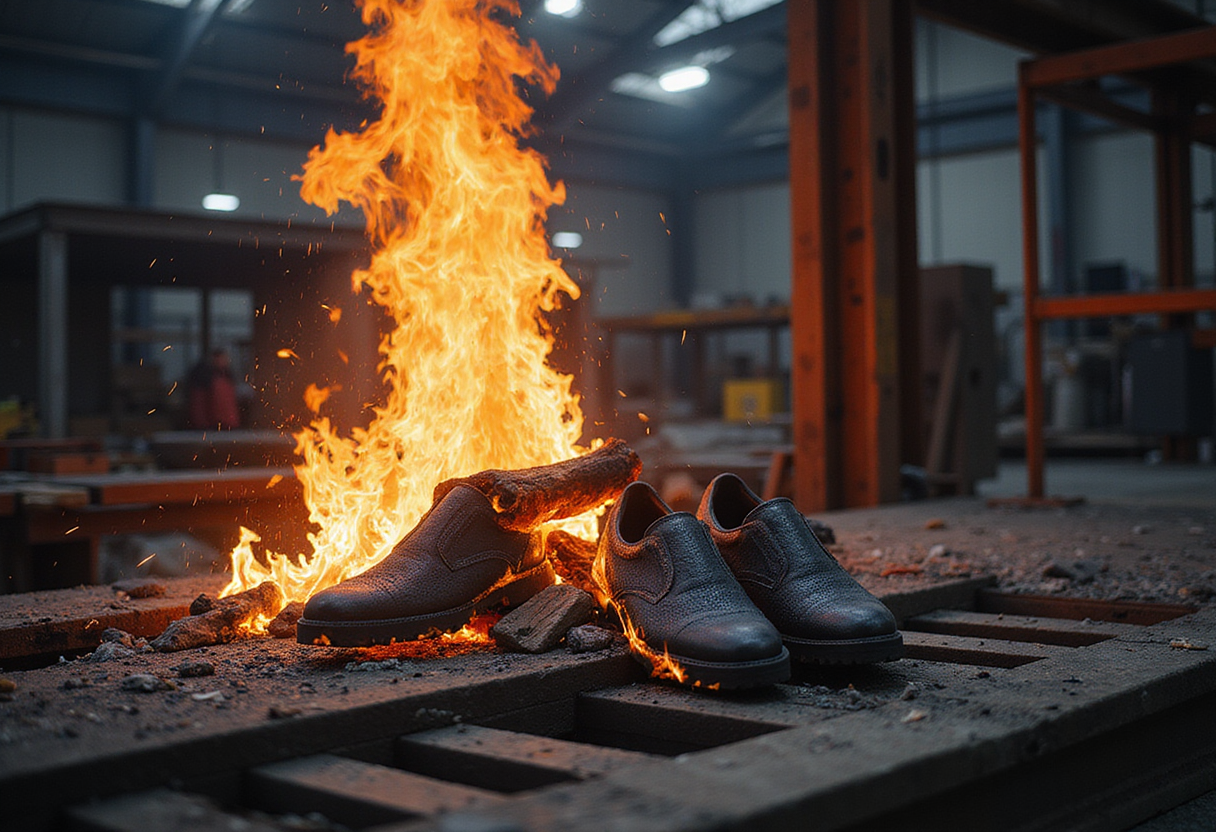
Fire guts rubber footwear manufacturing unit
A rubber footwear manufacturing unit has been gutted by fire, ThePrint reports, taking production capacity offline and forcing buyers to check open orders.
- Cut
- October 10, 2026
- Sew
- 3 min
- Ticket
- TKT-EF8B
Construction
A rubber footwear manufacturing unit was gutted in a fire, ThePrint reported.
The destroyed unit produced rubber-based footwear.
Volumes, headcount and affected buyers have not been disclosed.
Buyers sourcing from the region face potential order disruption and re-sourcing decisions.
A rubber footwear manufacturing unit has been destroyed by fire, ThePrint has reported. The plant, which produces rubber-based footwear, was gutted in the blaze, taking its production capacity offline with immediate effect.
The report confirms the loss of the facility but does not yet specify the number of production lines destroyed, the headcount affected, or the buyers whose order books run through the unit. Those details will determine how significant the disruption becomes for sourcing teams with open purchase orders at the site.
Why does one plant fire matter to sourcing desks?
Rubber footwear is a capacity-constrained category. moulded and vulcanised rubber production depends on specialised machinery — presses, vulcanisation lines and moulds — that often carries long replacement lead times. When a unit is gutted rather than partially damaged, restoration is not a matter of weeks.
For brands and retailers sourcing rubber footwear from the region, the immediate questions are commercial, not sentimental:
- Which open purchase orders were allocated to this unit, and at what volumes?
- Are tooling and moulds — often buyer-owned property held at tier-2 and tier-3 suppliers — destroyed or recoverable?
- Does the supplier have a second site able to absorb production, or must orders be re-tendered?
- What are the contractual force majeure and insurance positions on both sides?
What happens next at the supplier tier?
Suppliers hit by a total-loss fire typically move through three stages: a damage assessment and insurance claim, a decision on rebuilding versus relocating capacity, and interim efforts to salvage customer programmes through subcontracting or sister facilities. Each stage carries risk for the buyer. Subcontracting, in particular, can shift production to unvetted sites — which is why responsible sourcing teams respond to a fire like this with immediate traceability checks on any alternative unit proposed by the supplier.
Compliance teams should also treat the event as an audit flag. Any replacement facility needs its own social and environmental assessment before orders transfer. A fire loss does not suspend a buyer's due diligence obligations under its own supplier codes.
What should buyers do now?
Sourcing executives with exposure to the unit should act on three fronts this week. First, confirm allocation: identify which styles, quantities and delivery windows sit against the affected plant. Second, secure alternatives: qualify backup capacity now, because rubber footwear capacity tightens quickly when a unit exits the market, and competing buyers will move on the same supplier base. Third, protect tooling: establish the condition and ownership of moulds and establish who insures them.
ThePrint's report establishes the fire and the total loss of the manufacturing unit. The financial damage, the casualty picture and the identity of affected buyer programmes remain unconfirmed at this stage. Softgoods Report will update this story as supplier and buyer responses clarify the commercial impact.
The decision this news forces is straightforward: any brand sourcing rubber footwear from the region must verify within days whether its orders ran through the gutted unit — and if they did, whether its backup capacity and tooling protections hold.
via Google News: Footwear manufacturing (Source)
More from Grace Kim
Show full bio
Correspondent covering marketplaces and e-commerce at Softgoods Report.
245 articles