Softgoods Business & MarketsTKT-9C3A
Cultivated Leather Startup Qorium Rebrands as Reyva, Targets Luxury Supply Chains
Qorium becomes Reyva, pushing cell-cultivated leather with an 87% lower carbon footprint toward commercial volumes for luxury and automotive partners.
- Cut
- November 2, 2026
- Sew
- 3 min
- Ticket
- TKT-9C3A
Construction
Qorium rebranded as Reyva on Monday, targeting luxury fashion and automotive sectors.
Independent LCA by CE Delft estimates an 87 percent lower carbon footprint than traditional leather.
Co-founded in 2021 by Dr. Mark Post, creator of the first lab-grown beef burger; former Nike executive Michael Newton is CEO.
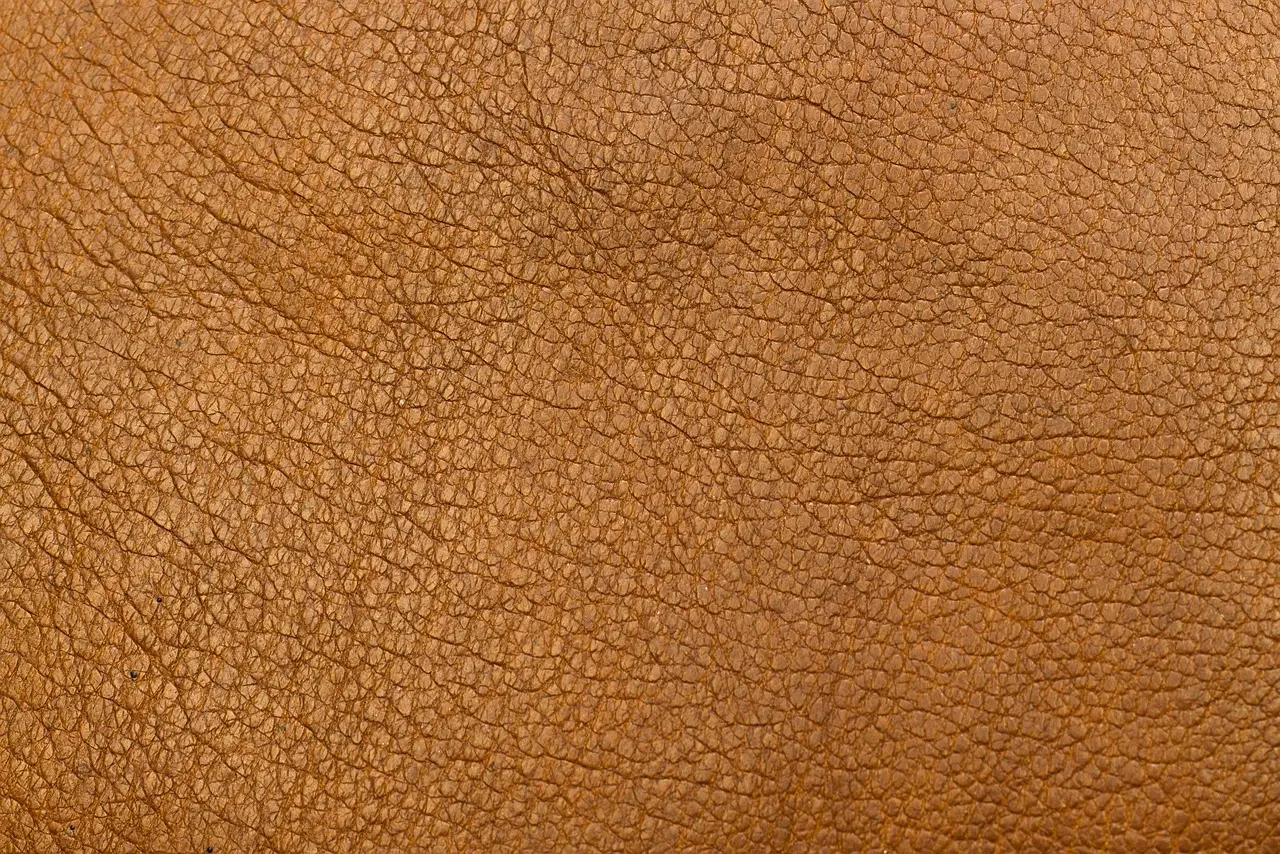
The company's first commercialization proof of concept, unveiled in 2024, was a 35x35 cm cultivated leather sample.
Production is being industrialized at Brightlands Maastricht Health Campus; initial availability will be limited.
Dutch cultivated-leather maker Qorium has rebranded as Reyva, formally shifting its commercial push from proof-of-concept toward luxury fashion and automotive supply at scale. The company confirmed the change in a statement on Monday and said it is industrializing production at the Brightlands Maastricht Health Campus in the Netherlands.
The rebrand positions Reyva as a global material brand for buyers who need genuine hide qualities — strength, breathability, durability — without livestock inputs. For sourcing teams, the pitch is control over quality and traceability at the tier-one material level, something conventional leather supply chains struggle to guarantee.
Who is behind the material?
Reyva was co-founded in 2021 by Dr. Mark Post, the scientist who developed the world's first laboratory-grown beef burger more than a decade ago. Commercialization became a serious goal in 2023, when Michael Newton, a former Nike executive, took over as CEO.
A year later, the company unveiled its first proof of concept for full-scale commercialization: a cultivated leather sample measuring 35 by 35 centimeters. That sample unlocked additional funding to bring the product to market, the company said.
"Reyva reflects the company we have become: ambitious, design-led and ready to stand alongside the world's leading material brands," Newton said in a statement.
"Our science gives us a fundamentally new way to make real leather. Our next chapter is about turning that capability into a material that designers and manufacturers choose for its beauty, consistency and performance, as well as its sustainability credentials," he said.
The name itself carries the strategy: "re" nods to reinventing leather, "rey" is Spanish for king — a luxury signal — and "va" suggests forward motion, according to the startup.
How does the process actually work?
The production chain starts with a small, painless biopsy from an animal, Reyva said. Collagen is grown directly from animal cells and cultivated through a proprietary process into uniform sheets, which are then tanned.
The output is chemically the real thing — the same natural material that gives conventional leather its performance properties — but grown in a factory rather than sourced from slaughterhouses. Uniform sheets also mean fewer defects and more predictable yields than variable hides.
What are the sustainability numbers?
On compliance-facing claims, Reyva points to an independent life cycle assessment by CE Delft estimating an 87 percent lower carbon footprint than traditional leather. That figure is the kind of data point luxury houses increasingly need as EU disclosure rules tighten around environmental marketing.
Demand-side signals support the shift. A 2021 exploratory study by the Material Innovation Initiative, surveying more than 500 U.S. respondents, found 55 percent preferred alternative leather. Most of those respondents said they would buy real leather grown from animal cells in a factory.
What's the sourcing decision?
Reyva said it is working with selected partners in automotive and luxury fashion as it moves from development to commercial volumes. Initial availability will be limited, with capacity increasing only as the company scales — meaning any brand committing now is effectively reserving a future allocation rather than booking deliverable volume.
For material sourcing heads at luxury houses, the calculus is straightforward: an 87 percent carbon reduction and full traceability are now technically on offer, but supply is the constraint. The question each buyer faces is whether to secure early access to limited cultivated volumes or wait for scale to catch up with demand.
via Sourcing Journal (Source)
More from Olivia Hart
Show full bio
Senior reporter covering regulation, policy and their impact on Light industry and softgoods manufacturing at Softgoods Report.
310 articles