Technical Textiles & NonwovensTKT-047F
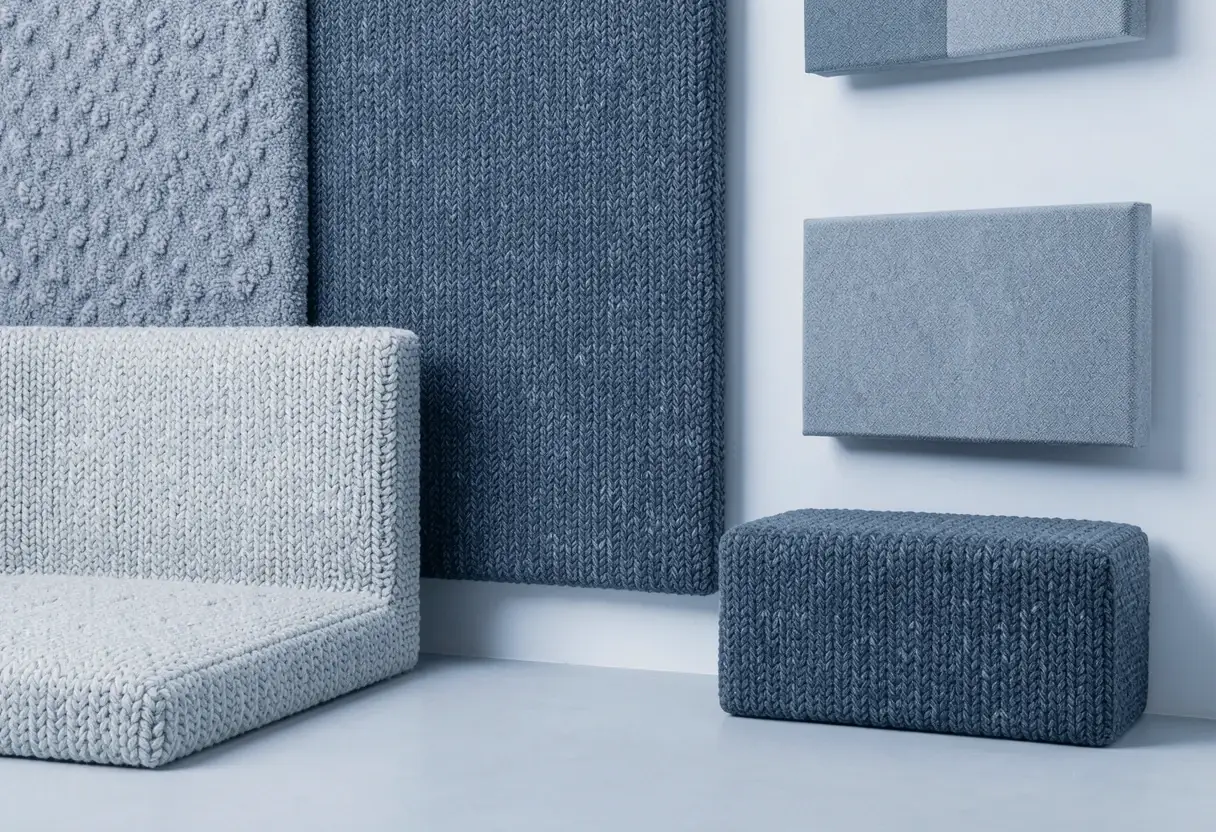
Cloud Sound explores seamless knitting for 3D acoustic panels
Studio Eva de Laat’s fifth Studio Work project maps seamless knitting for acoustic panels, while a ten-speaker Sound Garden show links textile form with sound.
- Cut
- November 18, 2026
- Sew
- 4 min
- Ticket
- TKT-047F
Construction
Cloud Sound is the fifth edition of Studio Eva de Laat’s Studio Work research series.
The report names no buyer orders, factory commitments, target price or supplier contract.
Sound Garden combined 10 handcrafted wooden speakers with experimental knitted textiles at Salon188 in Amsterdam.
The installation ran from 21 October to 1 November 2026 during Amsterdam Dance Event 2026.
Studio Work Vol. 5 – Cloud Sound is available as a free download.
Cloud Sound, the fifth edition of Studio Eva de Laat’s Studio Work series, remains an exploratory initiative rather than a commercially validated acoustic product; Knitting Industry’s report identifies no buyer orders, factory commitments or production capacity for the Dutch studio’s project.
Studio Eva de Laat’s project summary states: “The project remains an exploratory research initiative rather than a commercially validated acoustic product.” The report also identifies no target price or supplier contract.
How does the knit change room acoustics?
The studio investigates whether engineered knitted structures, fibre selection and textile construction can improve acoustic comfort in offices, public spaces and homes.
Variables including stitch density, thickness, texture and volume alter how surfaces interact with reflected sound. The aim is to reduce reverberation—how long sound persists in a room—while moving beyond decorative coverings for conventional sound-absorbing materials.
Seamless knitting (whole-piece construction without conventional sewn seams) allows the studio to vary structure within a single textile. Potential building blocks include variable stitch densities, layered surfaces, spacer structures (three-dimensional knits that hold layers apart) and integrated cavities for acoustic panels.
Porous fillings and deliberately designed air gaps could enhance absorption, while floats, raised textures and quilted construction add volume and surface relief. That approach lets acoustic functionality and visual expression develop within the same knitted object.
Which fibres are in the frame?
Recycled polyester, already widely used in acoustic panels, provides the starting point for knitted spacer structures, textured surfaces and internal fillings.
Wool, cotton, hemp, polylactic-acid (PLA)-based fibres and cork yarns are under review for different knitted constructions and porous layers.
Those choices also raise circularity questions. The report names no recycling certification, chain-of-custody rule or product law, so its fibre list does not establish a certified circular product. Cloud Sound has not specified a bill of materials, meaning the fibre and component mix required for production.
How does sound become a textile form?
Cloud Sound translates sound into tactile and sculptural form through concentric circles, spirals, radial geometries and repeating patterns associated with vibration and resonance. Artistic references include Hilma af Klint, Fujiko Nakaya and Mariko Mori, whose work examines relationships among geometry, atmosphere and perception.
Softly contoured surfaces, dimensional textures and subtle colour shifts run through misty blues, pale lilacs, peach tones and mineral greys. Changes in stitch construction, padding and volume affect how each textile holds shape, reflects light and sits within its surroundings.
What did the ten-speaker Sound Garden establish?
Cloud Sound builds on Studio Eva de Laat’s wider research into engineered textiles for fashion, interiors and mobility. A recent collaboration with Kikuno, an Amsterdam specialist in handcrafted wooden speakers founded by Japanese sound engineer and craftsman Yuji Tsutsumida, provides context for that work.
Presented during Amsterdam Dance Event 2026, Sound Garden combined 10 individually handcrafted wooden speakers with experimental knitted textiles at Salon188, an Amsterdam art salon dedicated to Asian contemporary culture. It ran from 21 October to 1 November 2026, turning the venue’s rooms into immersive listening environments.
For the collaboration, variations in yarn, knitted structure, density and surface texture shaped the material character of the sound objects. Their contrast with solid wooden cabinets connected craftsmanship, acoustic engineering and sensory design. Knitting Industry describes Tsutsumida’s approach as focusing on “natural sound reproduction,” preserving “the depth, nuances and emotional qualities of recorded music.”
Visitors encountered changing light, acoustics and material combinations, which influenced how sound and objects were perceived. The textiles contributed atmosphere and tactility to the interiors and prompted attention to materials and listening environments. The report also notes that small changes in yarn properties and knitted architecture can significantly influence a material’s behaviour and appearance.
Is Cloud Sound ready for sourcing?
Sound Garden focused on the sensory relationship between textiles, speakers and architectural space; Cloud Sound turns more directly towards engineered knitted structures with possible acoustic function. Together, the projects reflect the studio’s growing interest in textile technology for interior comfort, wellbeing and multisensory environments.
Cloud Sound also complements environmentally responsive textile research, including passive air-improving interior applications supported by Dutch innovation funding. The report does not say that this funding covers Cloud Sound itself, so the two funding and research tracks should not be conflated.
Studio Eva de Laat has made “Studio Work Vol. 5 – Cloud Sound” available to download free of charge.
The report identifies no purchase commitment, capacity investment or production specification. For interior-material buyers, the decision is to keep Cloud Sound on a research-and-development watchlist rather than an approved-material list until the studio supplies absorption and reverberation test data for individual knits, construction specifications and evidence for any fibre or circularity claim.
Until then, Cloud Sound signals a potential route for seamless knitting beyond apparel into architecture and interiors, not a qualified acoustic-panel supply option.
via evadelaat.com (Original)
More from James Calloway
Show full bio
Market editor covering people, launches and day-to-day practice in Light industry and softgoods manufacturing at Softgoods Report.
362 articles