Textile Mills & FibersTKT-7469
Circulose announces Ortviken restart with 16 brand commitments
Circulose announced the Ortviken restart with 16 brand commitments, about 130 staff and Amanda Geijer as interim CEO from 1 December, following Altor’s 2024 acquisition.
- Cut
- November 18, 2026
- Sew
- 3 min
- Ticket
- TKT-7469
Construction
The restart was announced on 10 November with commitments from 16 brands.
Circulose has an organisation of around 130 people and a plant ready to produce.
Private equity firm Altor acquired Circulose in 2024.
Jonatan Janmark steps down as CEO on 1 December; Amanda Geijer becomes interim CEO.
Ortviken is claimed to be the world's first commercial-scale chemical textile recycling facility.
Circulose announced on 10 November that it will restart the Ortviken chemical textile recycling plant, backed by commitments from 16 brands and an organisation of about 130 people. The company expects the restart to supply recycled raw material to brands and fibre producers at commercial scale, after private equity firm Altor acquired the business in 2024.
What changes at Ortviken?
Circulose said the decision follows a renewed focus on securing market demand before resuming full operations. It did not disclose production capacity, order volumes, delivery schedules, contract terms or the names of the 16 brands.
Executive chair Helena Helmersson said: “Our focus has been to align the production restart with confirmed demand. With commitments from 16 brands, and more on the way, we are now there.” She said Circulose now had support from leading brands and fibre producers, an organisation of around 130 people with relevant expertise, and a plant ready to produce.
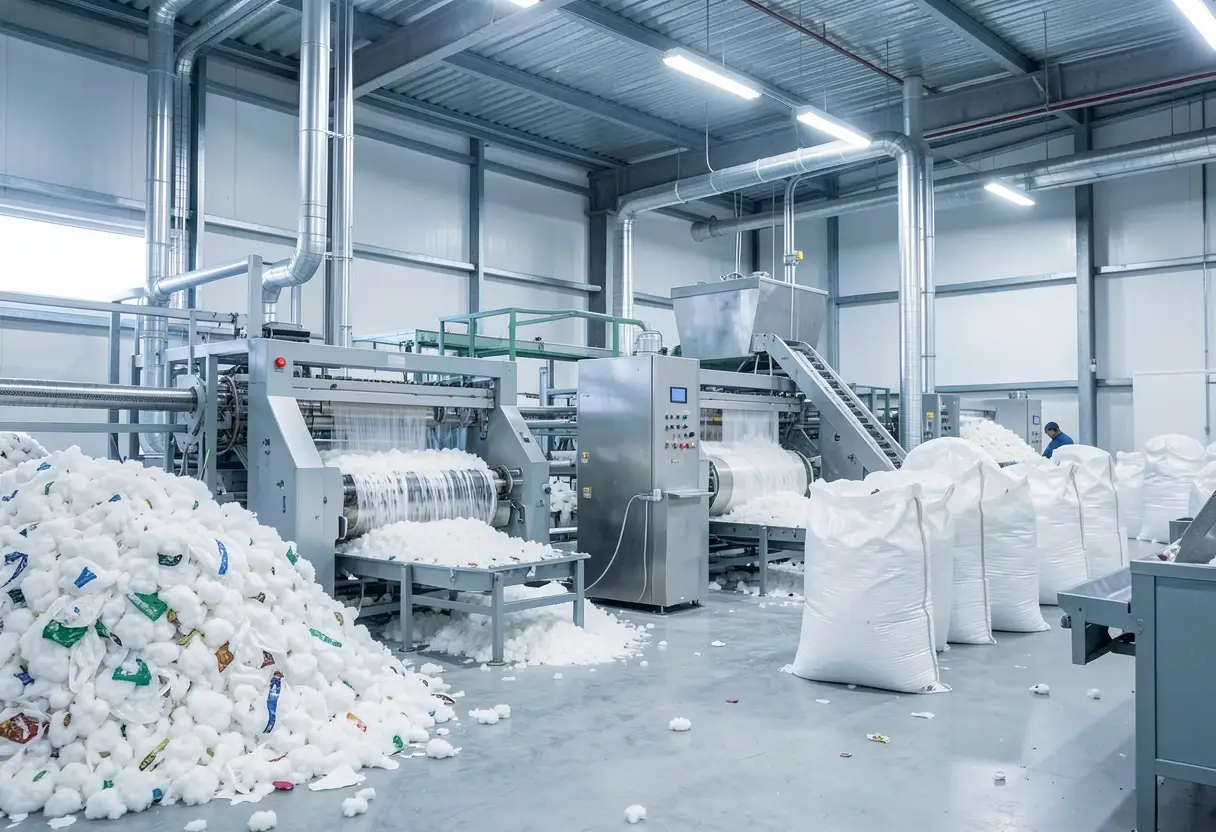
Circulose describes Ortviken as the world's first commercial-scale chemical textile recycling facility. The plant uses chemical recycling to process cotton-rich textile waste into CIRCULOSE, a recycled dissolving pulp used to produce viscose and lyocell fibres. The process converts discarded textiles into material for new fibre production rather than relying solely on virgin inputs.
Circulose said the material should help divert textile waste from landfills and incineration. The announcement names no certification, statutory waste-recovery route or measured diversion figure. Buyers must trace that claim to an applicable standard, law or documented chain of custody before using it in sourcing decisions.
Takeaway: Ortviken offers commercial-scale pulp supply, but buyers still need volume and environmental evidence.
Who leads the production ramp?
Jonatan Janmark will step down as chief executive on 1 December, after two years overseeing the production restart. Chief financial officer Amanda Geijer will become interim CEO while Circulose searches for a permanent replacement. Geijer joined Circulose as CFO in 2025, having previously served as vice-president of finance at Billerud Europe.
Executive chair Helena Helmersson will support Geijer during the transition. Janmark said he was proud of rebuilding Circulose and believed confirmed market demand, a strong team and a plant ready for production made the handover appropriate. His departure comes as the company moves from preparing the restart to increasing output.
“Restarting Ortviken is a milestone for Circulose and for the industry,” Geijer said. “Our focus now is to ramp up production safely and deliver on the commitments to our customers.” She identified increasing output while meeting customer commitments as the immediate priority.
Takeaway: The leadership change places an existing finance chief in charge of the current production ramp.
What should buyers require before contracting?
Circulose also provides supply-chain integration and traceability services to brands using its recycled pulp. That extends the commercial offer beyond material supply, although the announcement gives no scope, pricing or adoption details for those services.
The announcement does not identify the 16 brands or state whether its commitments are binding purchase orders, framework agreements or another form of demand agreement. Sourcing teams should request volume allocations, delivery windows, product specifications and the contractual status of each commitment. Helmersson said more brands were on the way, but the announcement gave no names or count for that additional interest.
No certification or law appears in the announcement to support the landfill and incineration diversion claim. Buyers should require evidence linking textile inputs, recovered pulp output and applicable waste-status requirements before making a recycled-content claim. They should not equate the plant's chemical-recycling description with independently verified circularity.
Takeaway: Brands and fibre producers should qualify Ortviken only alongside firm supply terms, traceable production records and evidence for the waste-diversion claim.
via just-style (Source)
More from Priya Raman
Show full bio
News editor covering people, launches and day-to-day practice in Light industry and softgoods manufacturing at Softgoods Report.
313 articles